

Budget-Friendly Time Travel: Discovering Dinosaur Footprints on the IOW
Our family took a memorable trip to the Isle of Wight—also known as Dinosaur Island—off the southern coast of England. And let me tell you, walking in the literal footsteps of dinosaurs was every bit as magical as it sounds.
Planning a trip across the pond? Our UK hub is bursting with facts, tips, and travel inspo.
I wasn’t prepared for how emotional it would feel to stand next to a preserved footprint from millions of years ago. Seeing it up close, placing our own feet in the impression, and imagining these giant creatures roaming what is now a quiet beach was honestly surreal. Afterward, we even got to go fossil hunting ourselves, which was just as thrilling for us as it was educational for our daughter. Honestly, we left wondering if we should all be studying paleontology.
If you’re planning a trip to the Isle of Wight and want to add something unforgettable to your itinerary—like touching real dinosaur footprint casts on a beach—this guide has everything you need to know.
For more on how we got there in style, check out our Hovercraft adventure to the Isle of Wight.
Let me know if you make it in the comments below! And what you find!
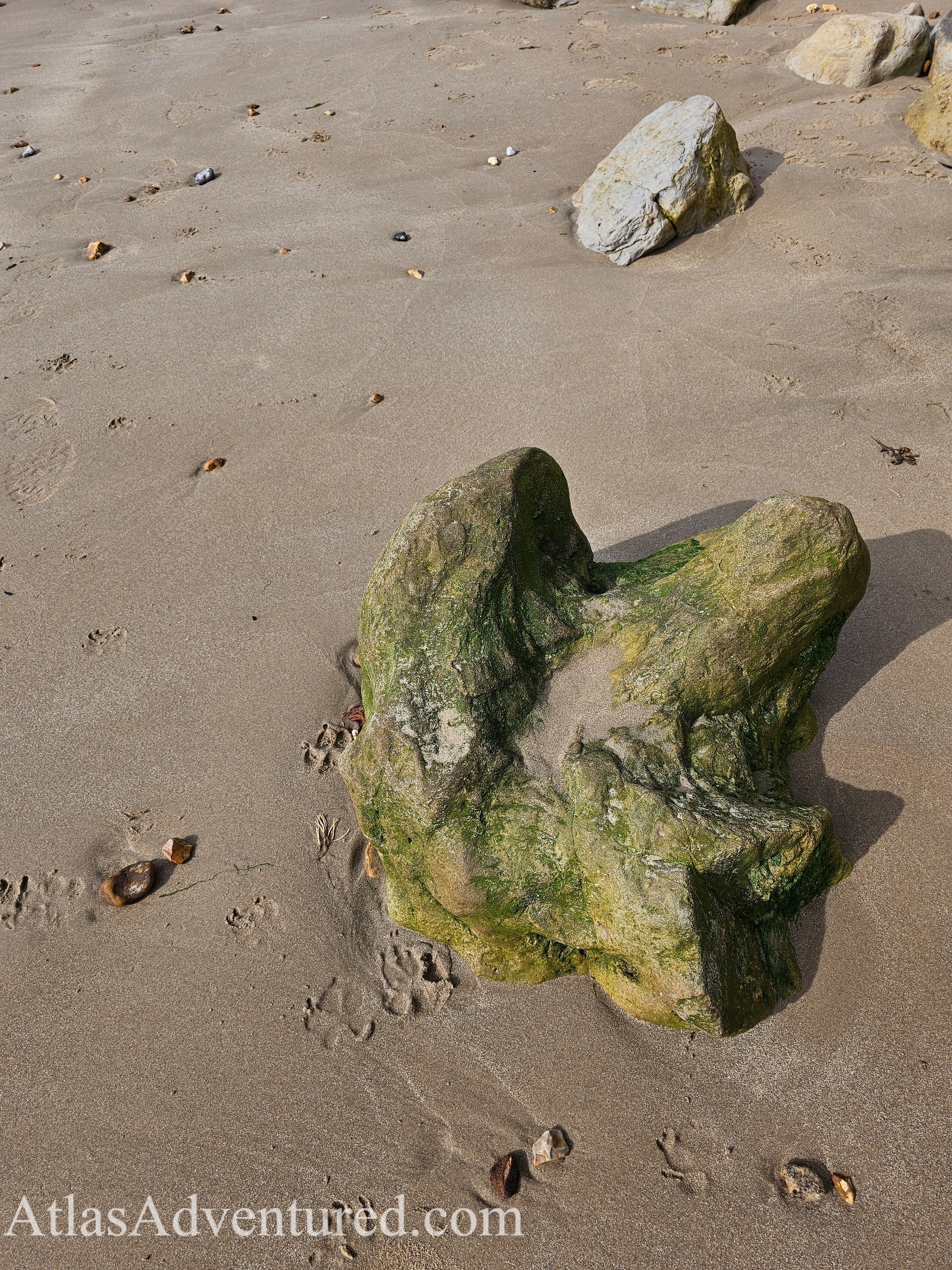
Dinosaur Island
People often call the Isle of Wight ‘Dinosaur Island’ due to the incredible number of fossils found here—making it one of Europe’s top prehistoric dig sites. Long before the term ‘dinosaur’ was even coined, experts had already started unearthing dozens of prehistoric species on the Isle of Wight, including species like Neovenator, Eotyrannus, and Polacanthus.
The Compton Bay and Hanover Point area is especially famous for its prehistoric footprints—most commonly from Iguanodon. The footprints, which often show three toes, measure roughly 30–60 cm wide and are easiest to spot during low tide.
Pro Tip: Be sure to check the Met Office website for low tide times.
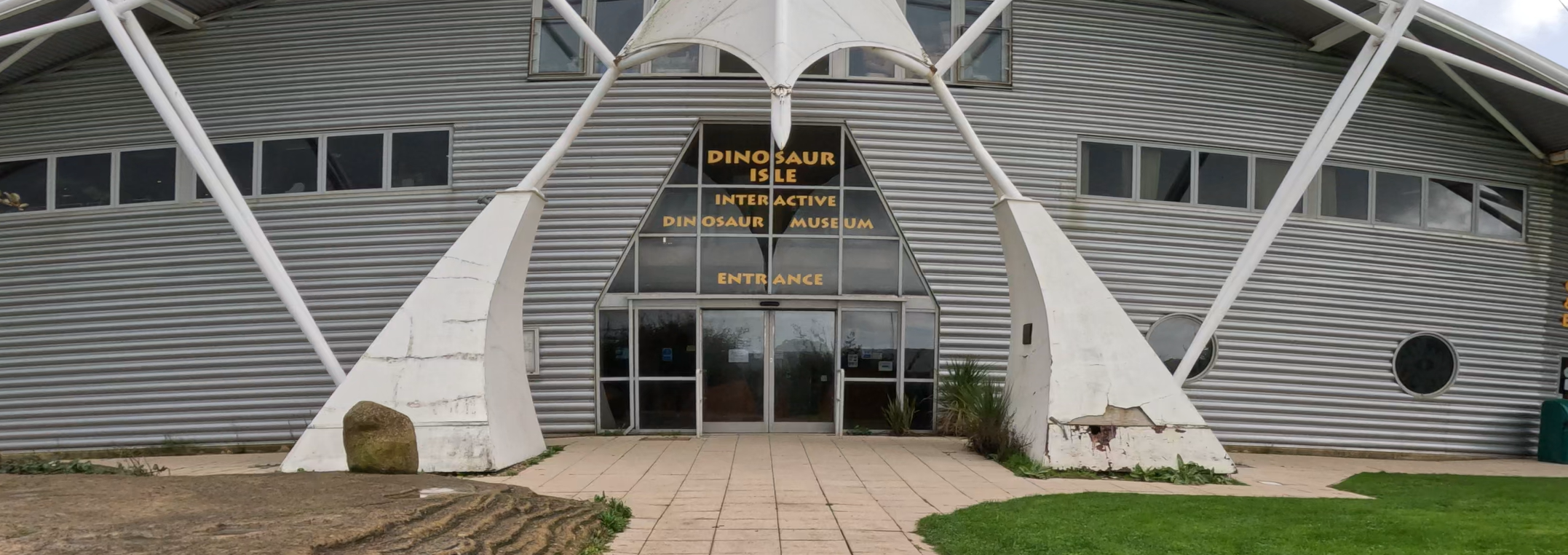
And if you want to level up your dino experience, stop by Dinosaur Isle Museum in Sandown. They even identify the fossils you find! We brought in some seashell fossils that turned out to be over 125 million years old!
Click here to see more about Dinosaur Isle Museum!
How to Get to the Dinosaur Footprints!
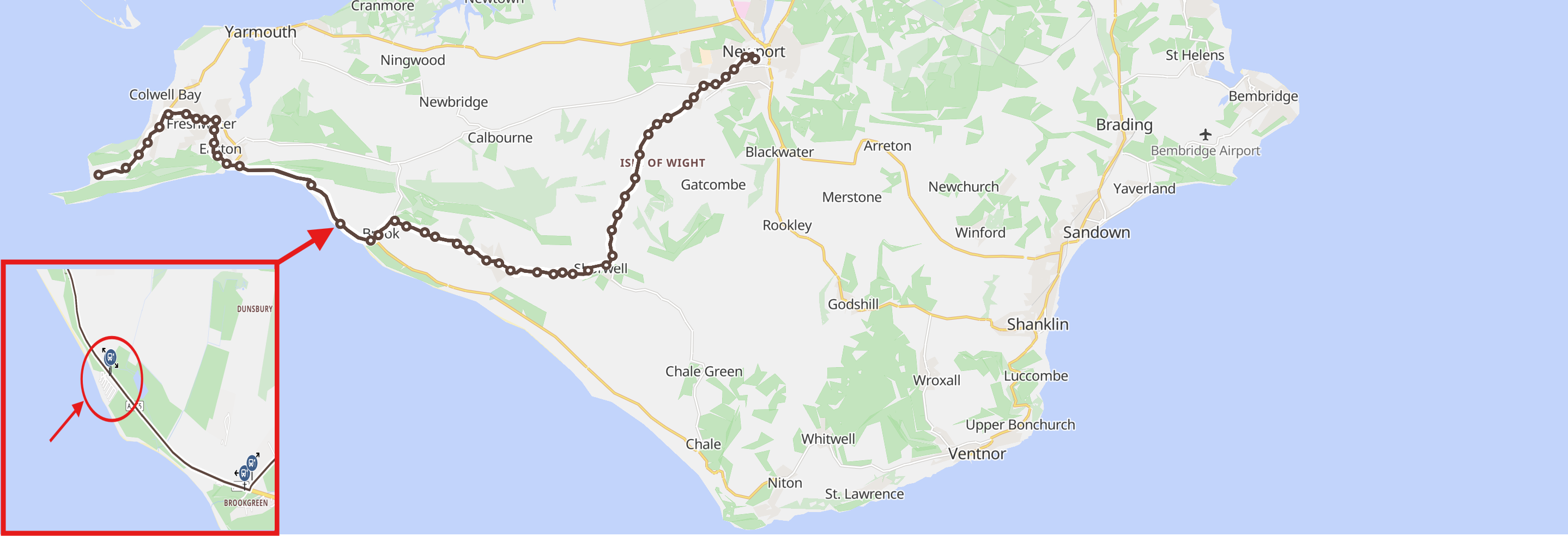
The dinosaur footprints are located at Hanover Point, along Compton Bay/Brook Bay, accessible via the A3055 Military Road. There are several ways to get there depending on your transportation method:
Public Transport
Take the Southern Vectis Route 12 bus from Newport to the Compton Bay stop. This drops you right outside the parking area, which also happens to have the only public restrooms in the area.
We took the bus from Sandown to Compton Bay. It required two transfers and about 2 hours of travel time. Each leg of the trip cost around £5 per person. The bonus? Double-decker buses with front-row views make the journey part of the adventure.
You can use the app Moovit or visit Island Bus Routes to check the bus timetables and directions. (All of the bus drivers are extremely friendly and will tell you if you’re getting on the right bus, or direct you to the correct one!).
Biking, Cycling, Walking
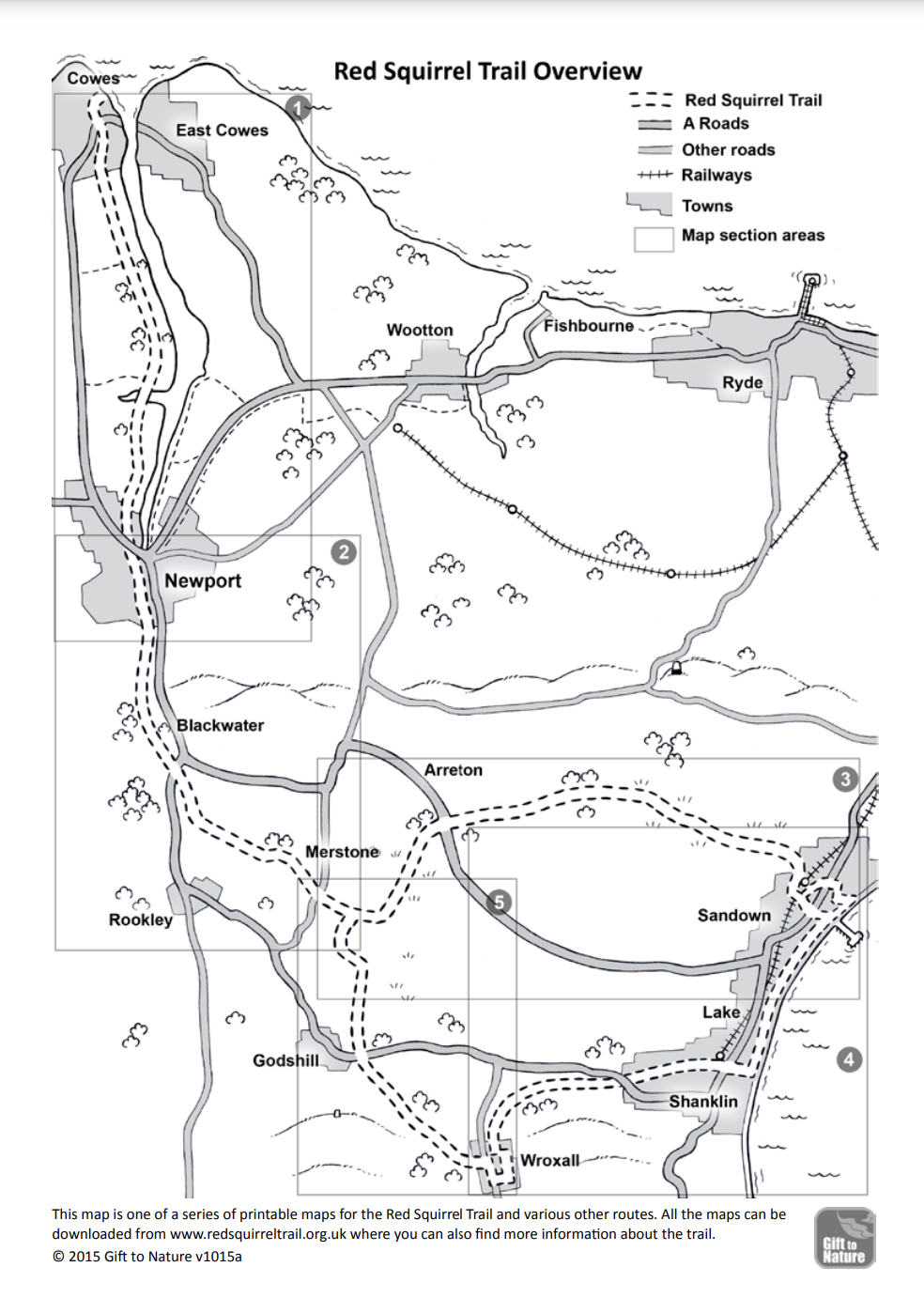
If you are biking, make your way to Red Squirrel Trail. A 32 mile journey through the heart of Isle of Wight’s stunning countryside that includes a stretch along the coastline.
If you are cycling, the off-road Tennyson Trail is a classic Isle of Wight cycling experience. It crosses National Trust land over Afton Down, Compton Down, Brook Down, and Mottistone Down. It’s a chalk track along the ridge tops that promises breathtaking views and a hearty workout.
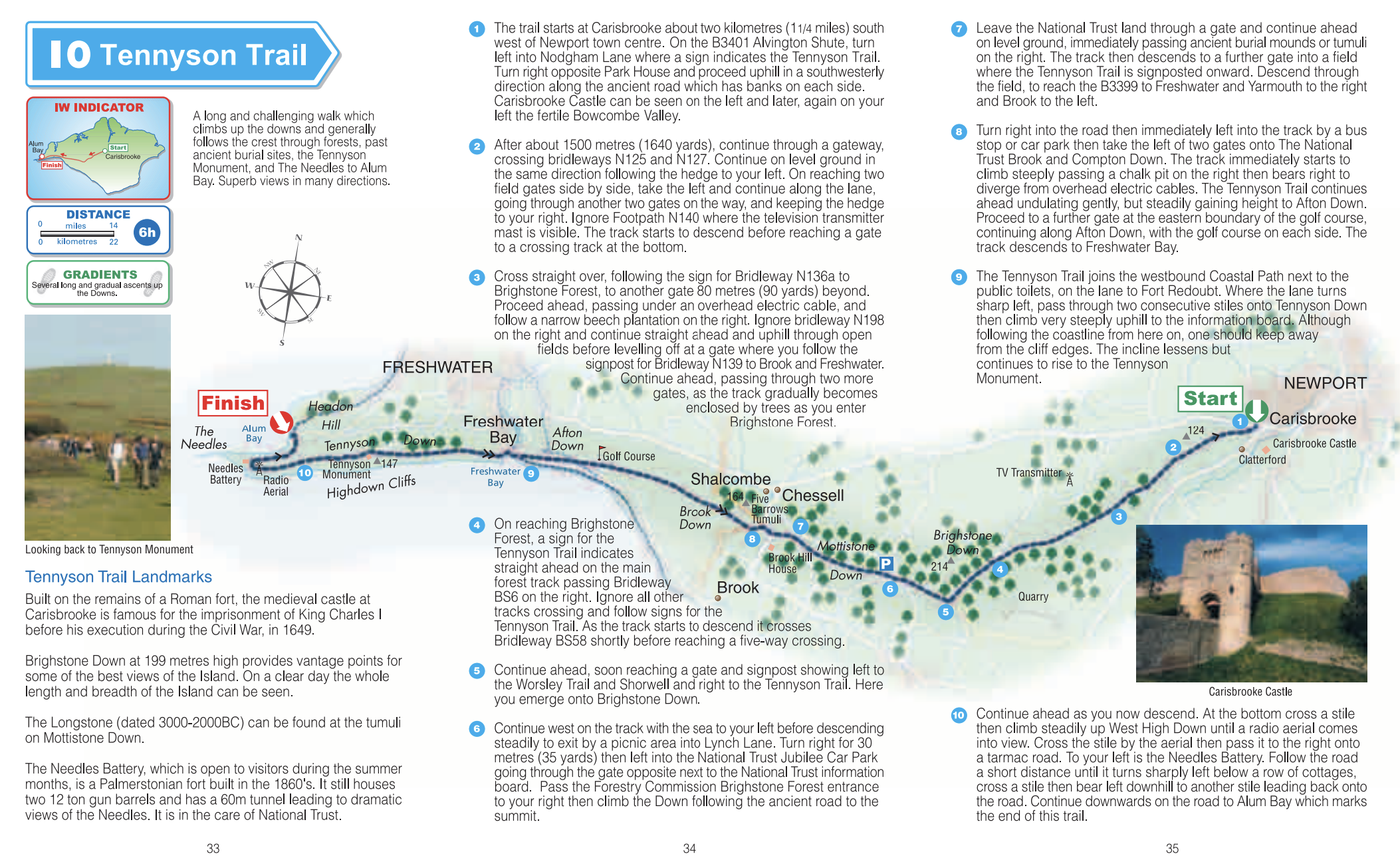
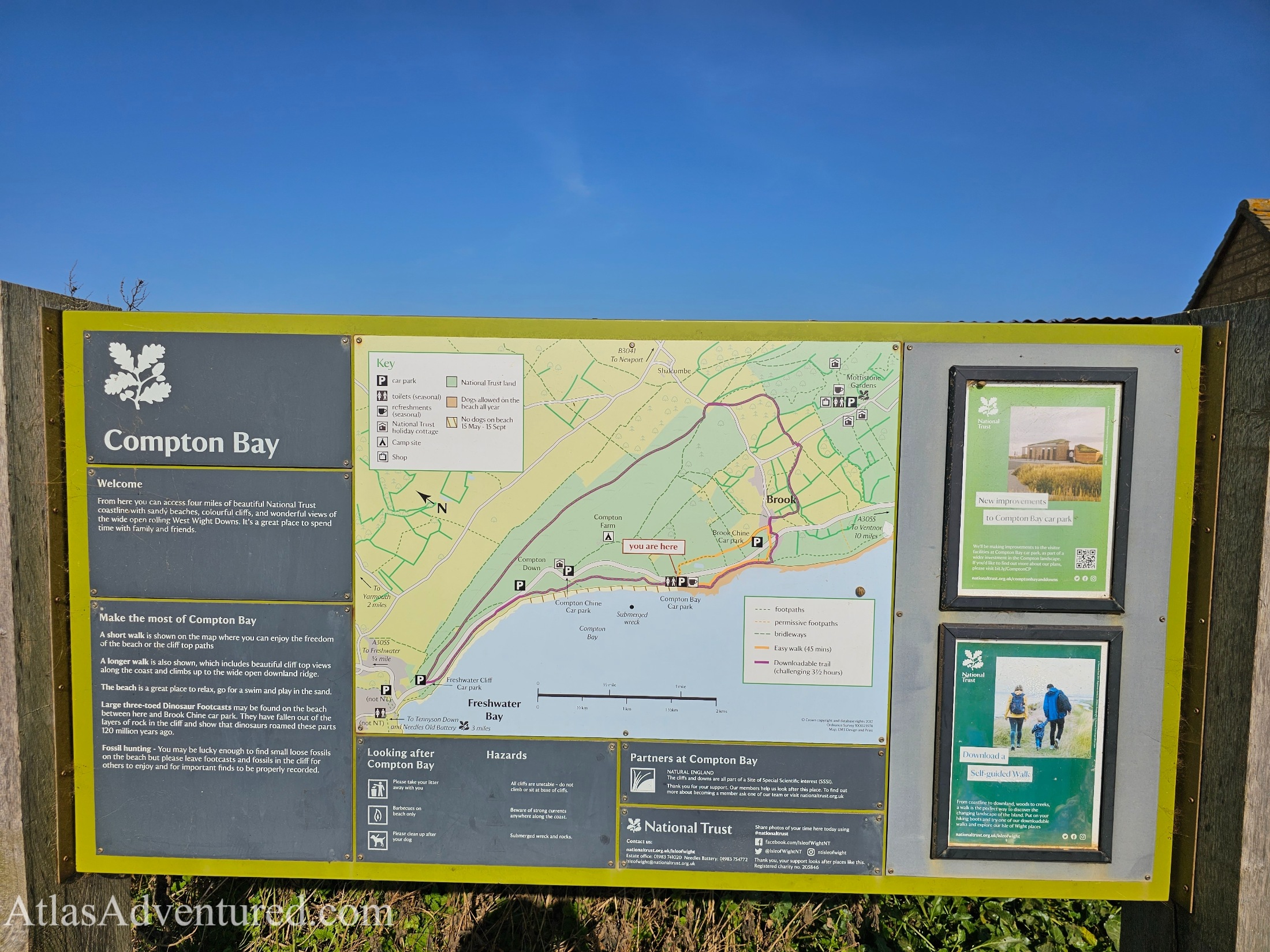
If you are walking, the Brook to Compton Walking Tour is a moderately challenging 3.7 mile loop trail that offers not just a hike, but a history lesson too.
Compton Down Circular is for those who fancy a bit more of a challenge. This 6.7 mile loop trail is perfect for hiking, mountain biking, and running. It’s open year round and is beautiful to visit at any time.
For more things to do while visiting the Isle of Wight, click here!
Parking
There are three pay and display car parks at Brook, Hanover, and Compton Chine.
The National Trust parking lot (free for members, so don’t forget to bring your card!) located at Compton Bay for £2 per hour, or at Brook Bay are the same price. There are machines in the lot to pay for parking, or you can pay by phone. The dinosaur footprints are located pretty much in between these two lots, so either would be fine.
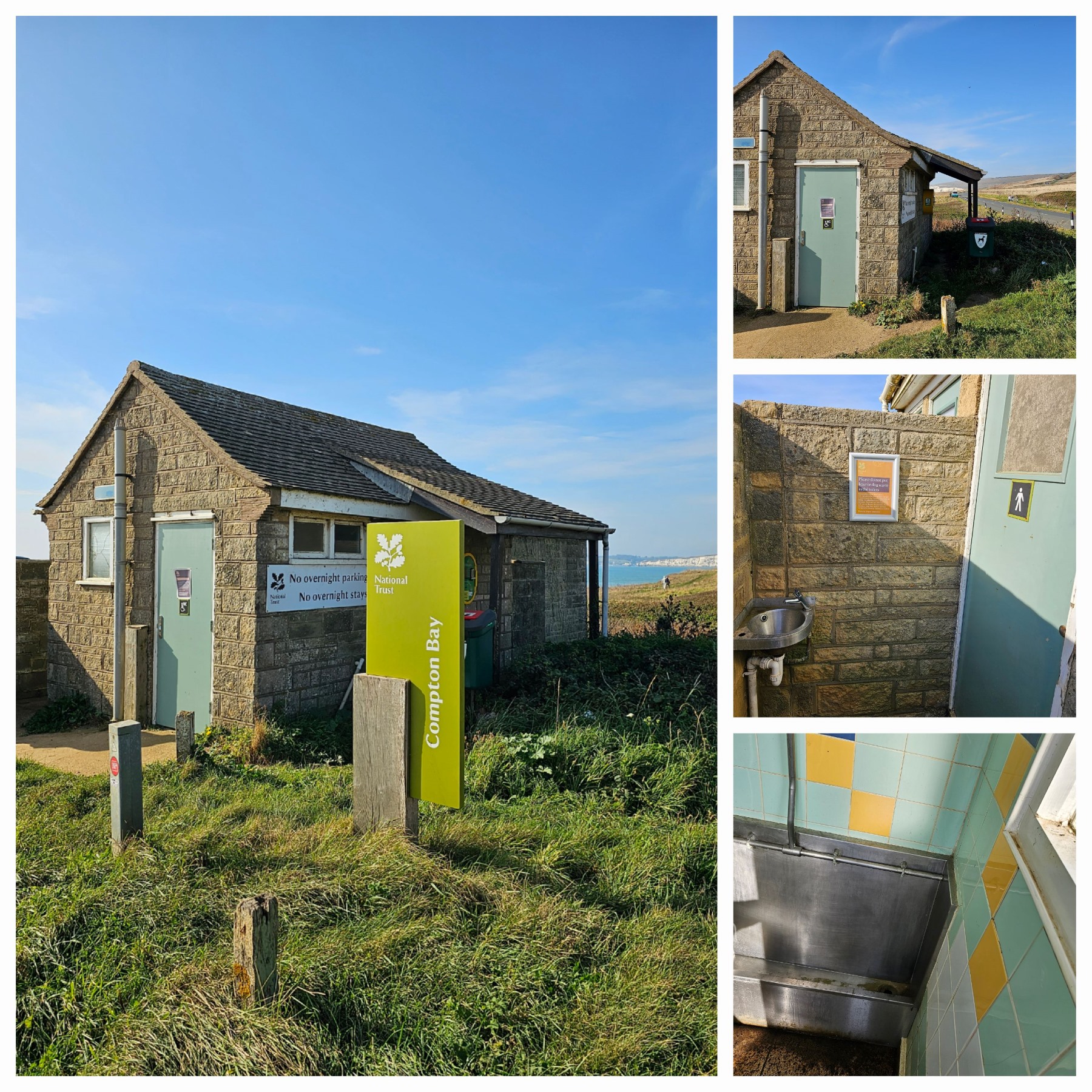
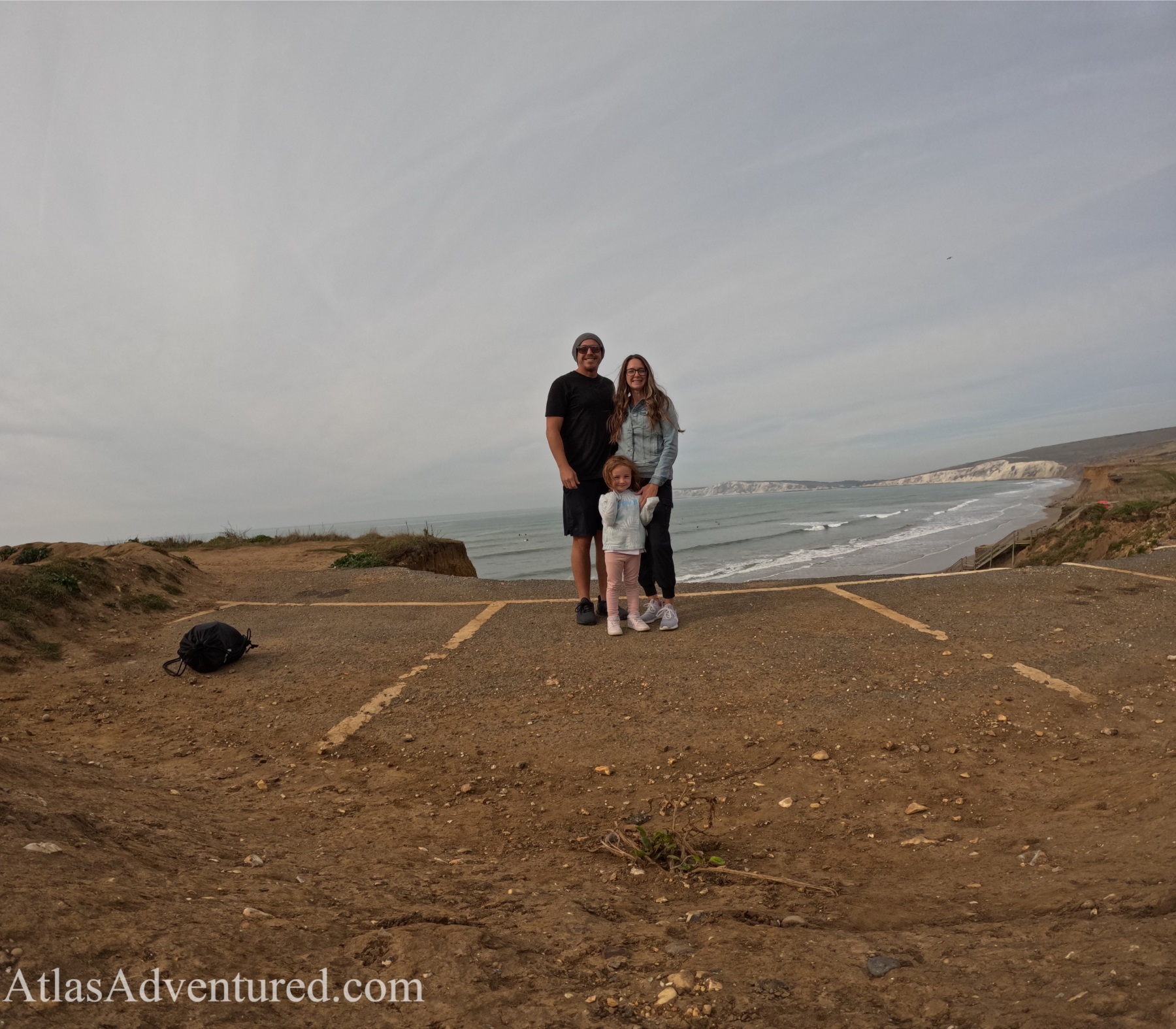
Once you get to the Compton Chine parking lot, there are public restrooms as soon as you enter. I believe they may be closed during the off season though. You are up high on the cliff which gives you the most amazing views.
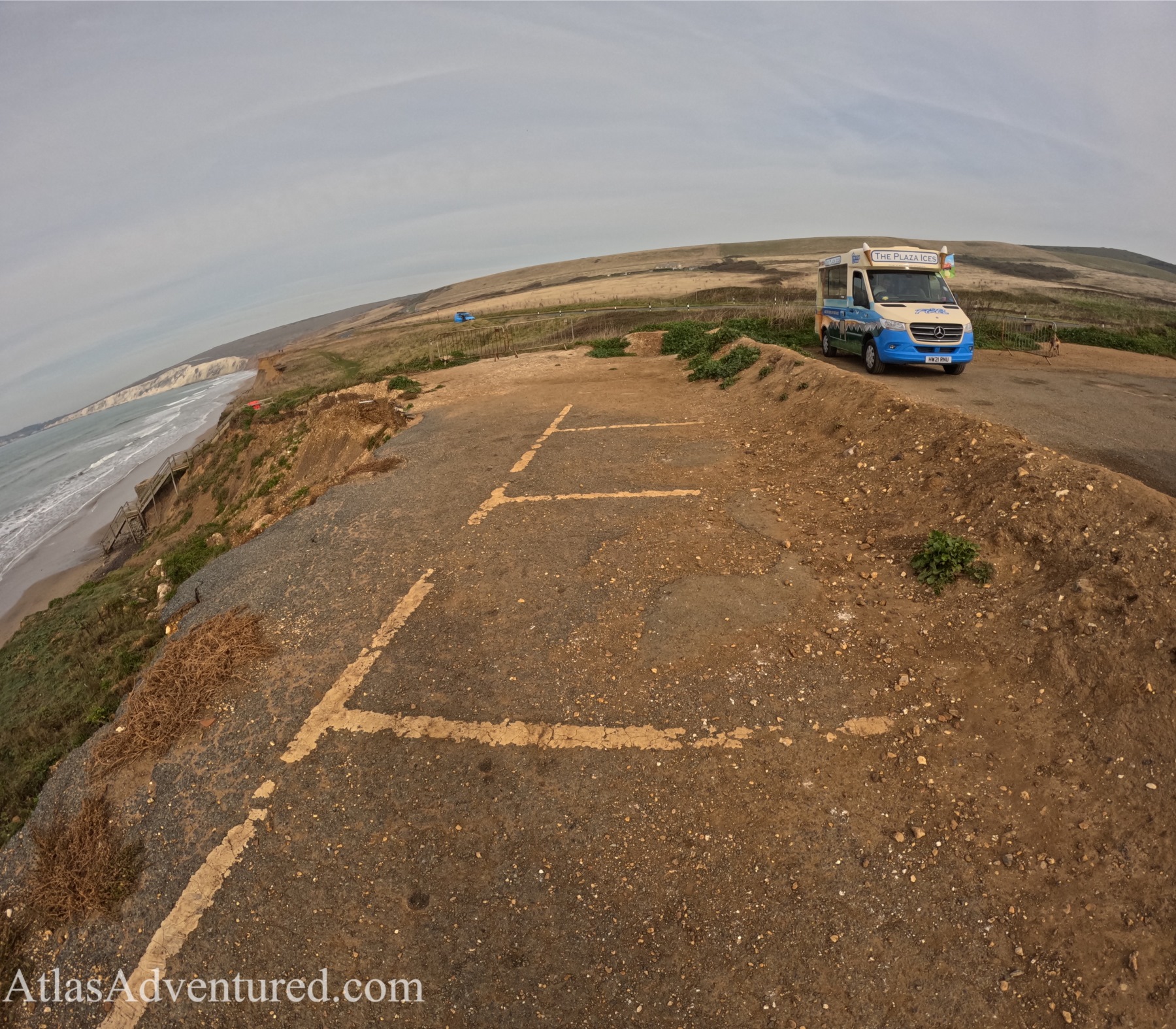
Important Safety and Fossil Etiquette:
- Cliff Safety: Stay away from the cliffs; they can be unstable.
- Tide Awareness: Only go fossil hunting at low tide and leave before it starts to rise.
- Slippery Rocks: Be cautious when walking on wet rocks.
- No Tools Allowed: Do not use hammers or dig into the cliff faces. The area is protected.
- Leave Fossils in Place: Enjoy them, photograph them, but let others enjoy them too.
You can also book National Trust fossil walks (group or private), where guides show you how to find fossils responsibly.
How to Find the Dinosaur Footprints
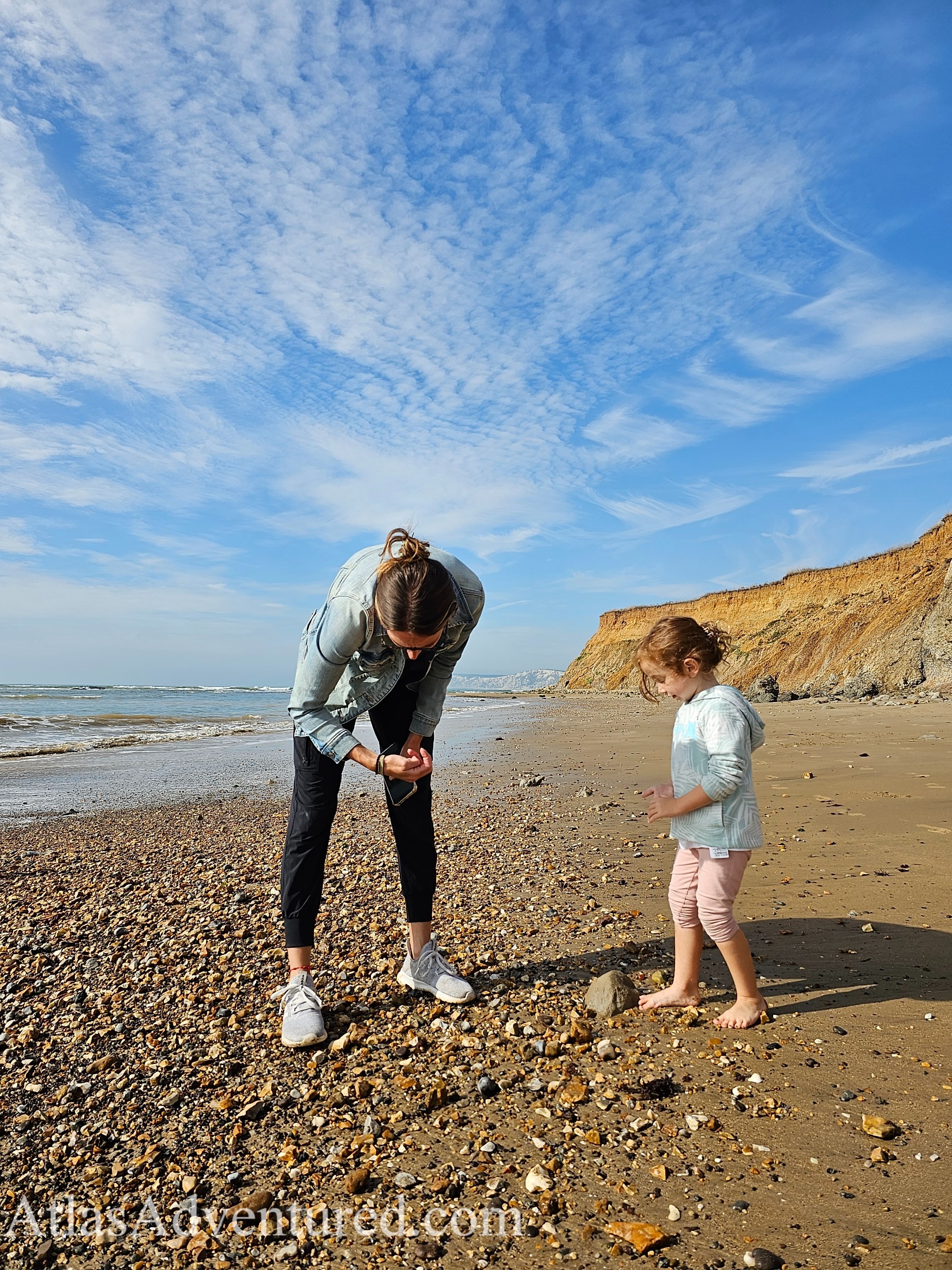
From the Compton Chine parking lot, head toward the wooden stairs on your right. Go down the stairs and turn left on the beach.
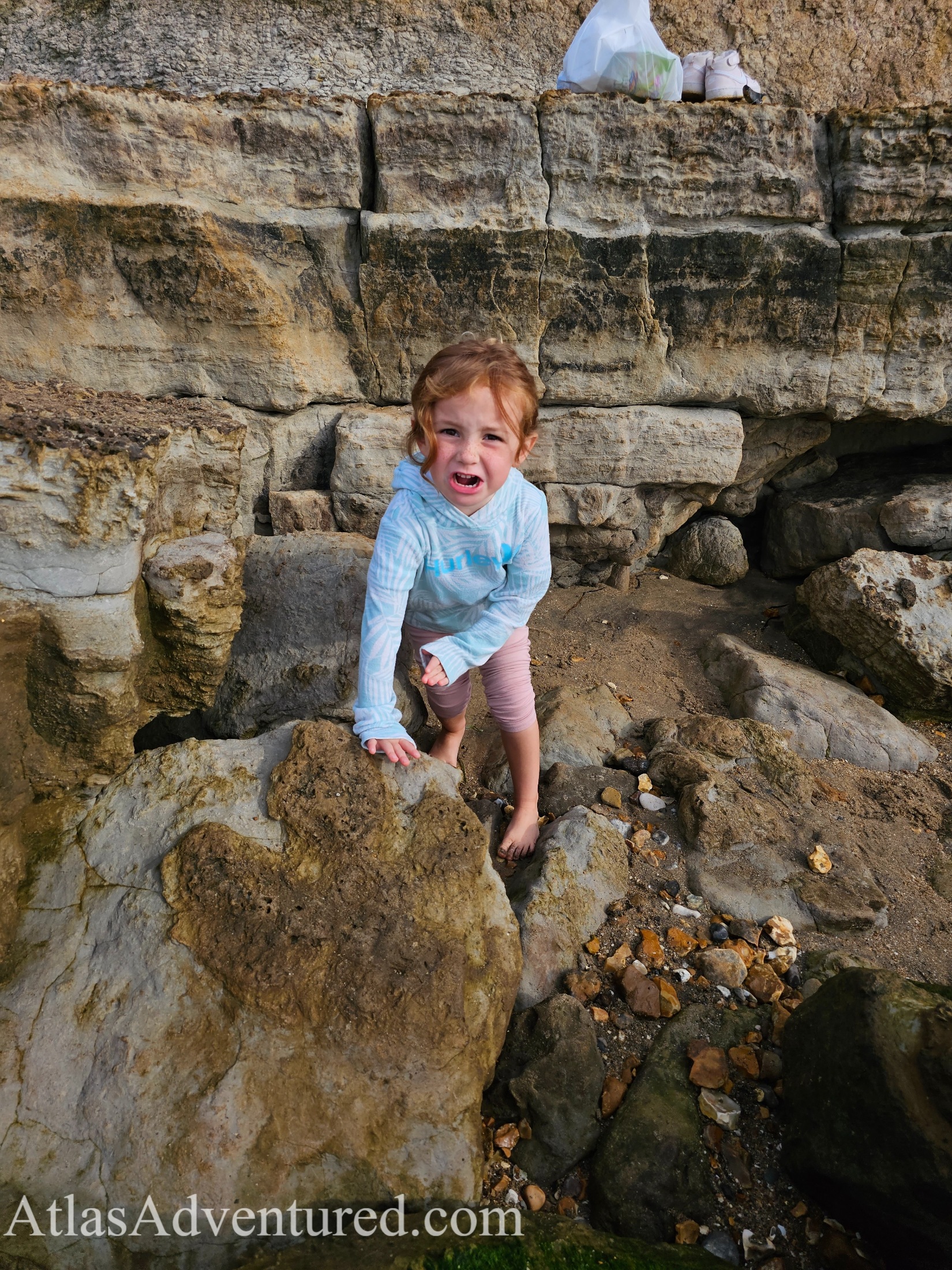
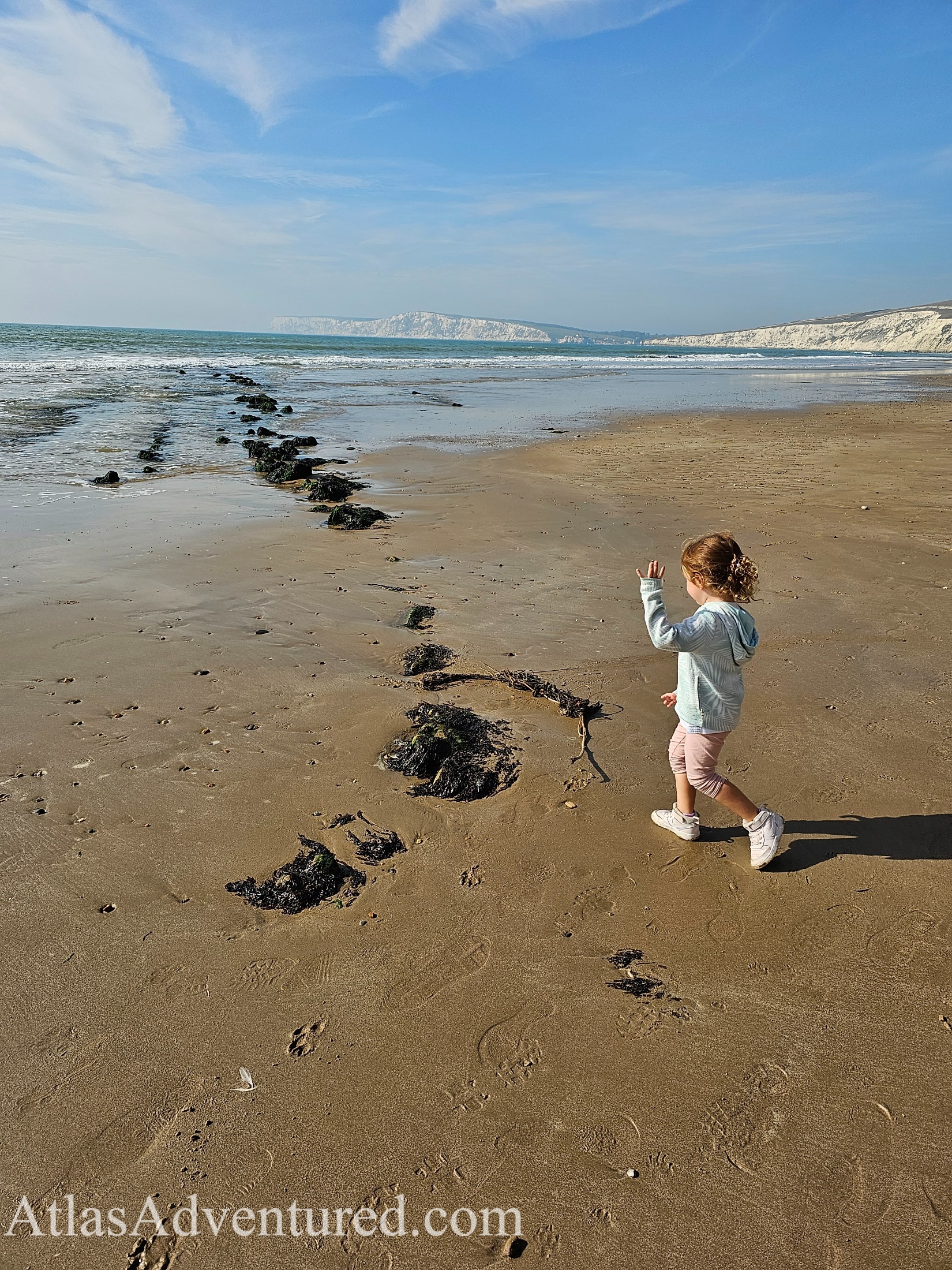
You may feel unsure at first, but keep walking. It took us about 5 minutes before we found anything. After climbing over a small rock wall, we found our very first footprint. And then another. And another. Some are partially covered in seaweed, so look closely at the larger rocks.
There are over 300 footprint casts in the area. Once you spot the first few, it gets easier to find more.
What Is A Footprint Cast?
A cast is when an animal dies and its body decays, leaving an imprint in the sediment. The imprint then fills in with minerals from sediment and groundwater and hardens to form a “cast” fossil.
Once you find the first few, you will start seeing them everywhere! There are more than 300 dinosaur footprints on the beach!
*Please leave all of the fossils on the beach so everyone can enjoy them*
The National Trust does fossil walks, which you can book on their website. You can opt for a private or group tour. They will show you how to find your own fossils
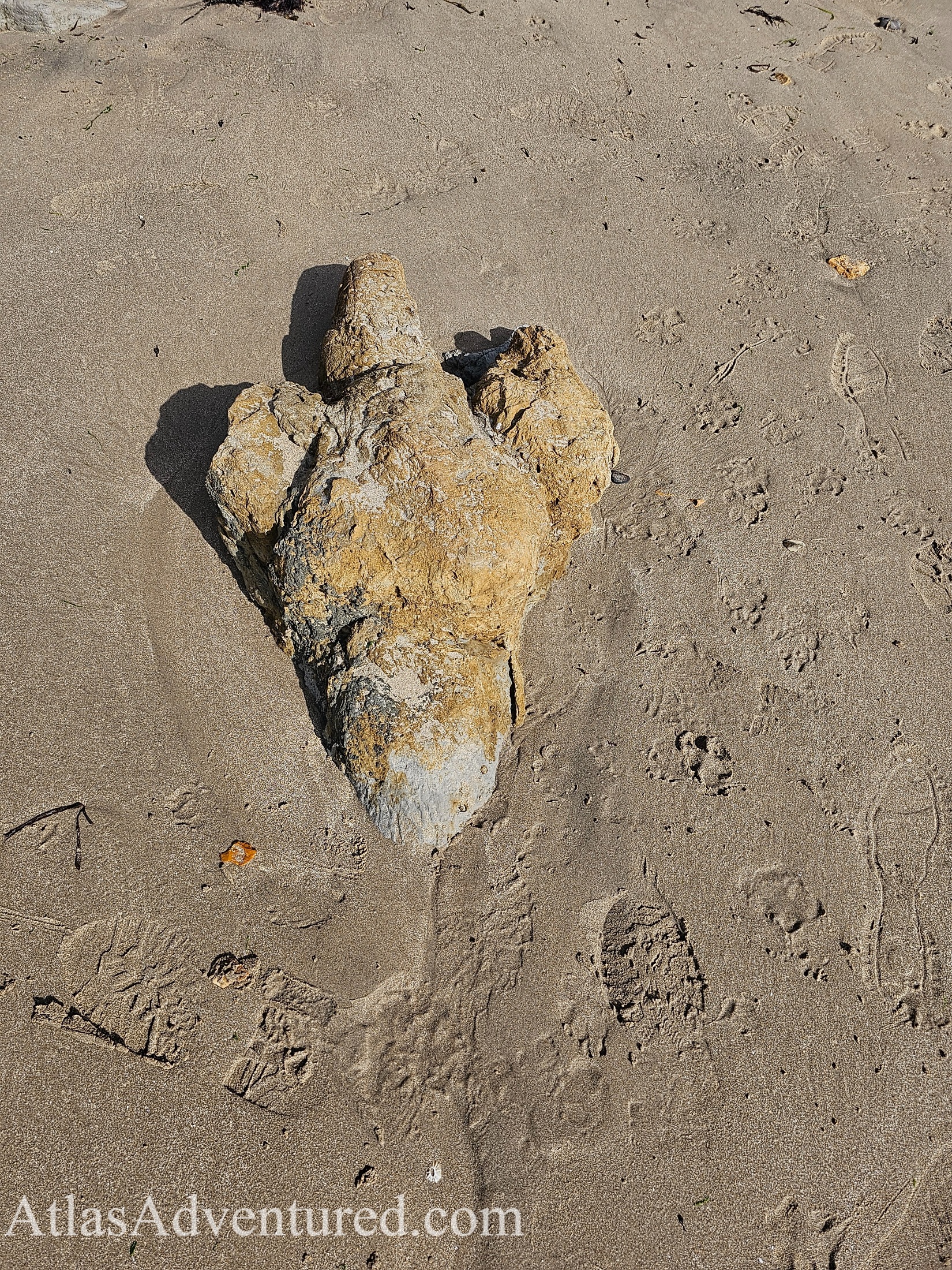
Congratulations! You found the Dinosaur Footprints!
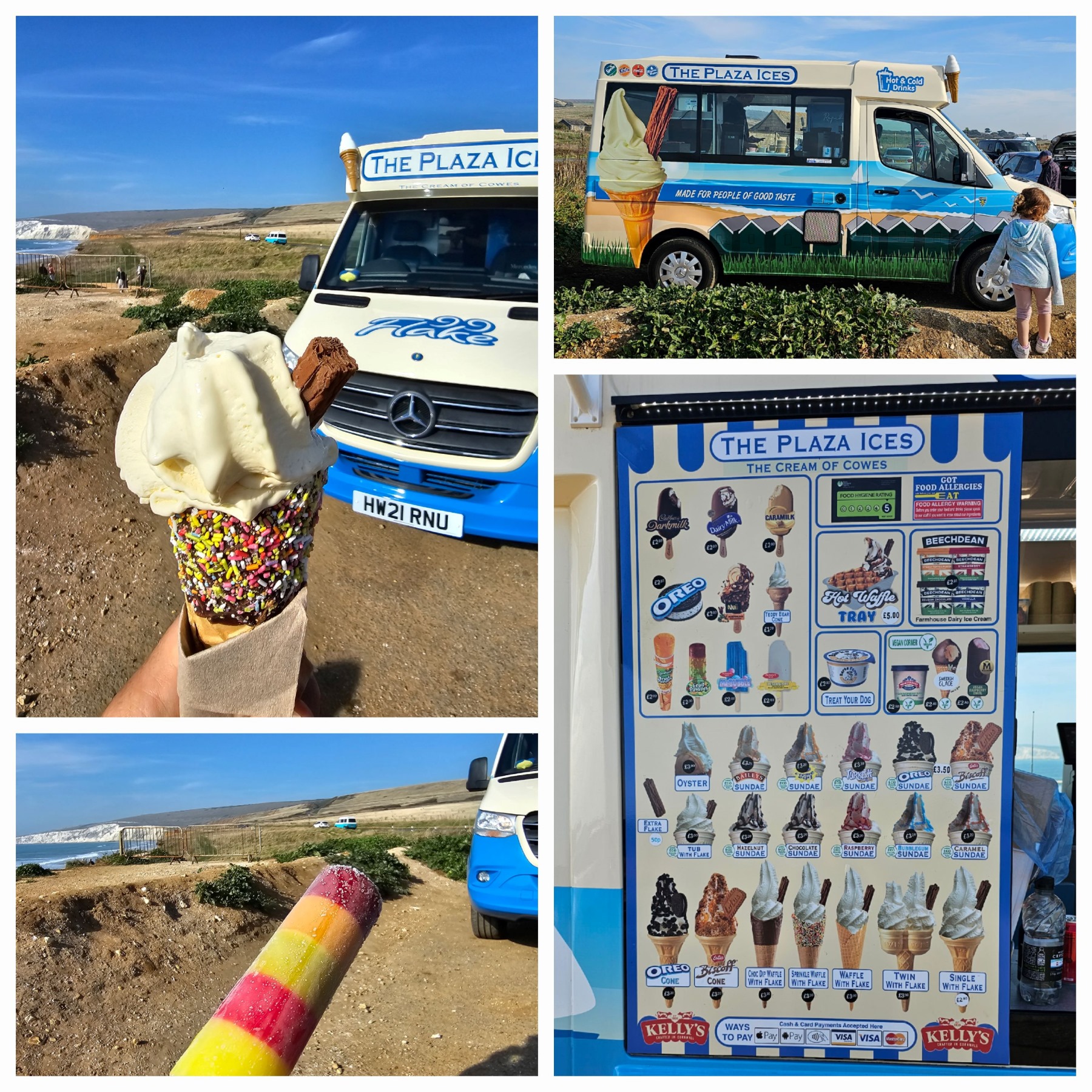
After all of your dinosaur footprint findings, once you get back to the parking lot, there is an ice cream truck parked there during the summer! You can find them on Facebook to check out the times they will be there. They sell ice cream and hot drinks as well.
This was my first time having a “Whippy”, and let me tell you. It was one of the best soft serve ice creams I’ve ever had. It was so light and flavorful, and served with a chocolate flake. So good! I highly recommend grabbing a little something while you’re there.
Looking for more things to do in the area? Check out the Wildheart Animal Sanctuary!
Find your own Fossils
If you are interested in finding your own fossils, you have come to the right place!
There are two main beaches on the island where you can find fossils: Compton Bay and Yaverland.
Found near Freshwater on the island’s southwest coast, Compton Bay is a go-to spot for fossil hunters—especially for spotting dinosaur tracks, marine fossils, and the occasional shark tooth.
Over on the east coast near Sandown, Yaverland Beach is another fossil-rich stretch that’s famous for producing dinosaur remains and ancient sea life. It is another hotspot for finding dinosaur fossils, especially bones and teeth of herbivorous dinosaurs such as iguanodons and hypsilophodons.
When you go fossil hunting, you should follow some basic rules to ensure your safety and respect the fossils:
-Always wear appropriate clothing and footwear.
-Bring a bag, to either collect fossils, or to pick up trash.
–Never dig into the cliffs or damage the rocks, as they are protected by the National Trust and the law.
-Only collect loose fossils that you find on the beach or in the rocks.
-Check the weather and the tide times before you go.
-Avoid going alone or in bad conditions.
-You should always leave the fossils where you found them, unless you have permission to take them.
-You can report your finds to the Dinosaur Isle Museum or the Dinosaur Expeditions Centre, as they may be of scientific interest.
Final Thoughts
Exploring the dinosaur footprints on the Isle of Wight was one of the most memorable parts of our family adventure. From the moment we spotted our first footprint to hunting for million-year-old fossils, it was like stepping into a prehistoric world.
If you make the trip, let me know in the comments what you found!
Where to next? Our travel guide hub is full of tips, stories, and ready-to-go itineraries.



One Response
Hi. As of July 2025 the Compton Chine parking lot stairs to the beach have washed away in a storm. So you can’t access the beach there. You have to use the Compton Bay car park.